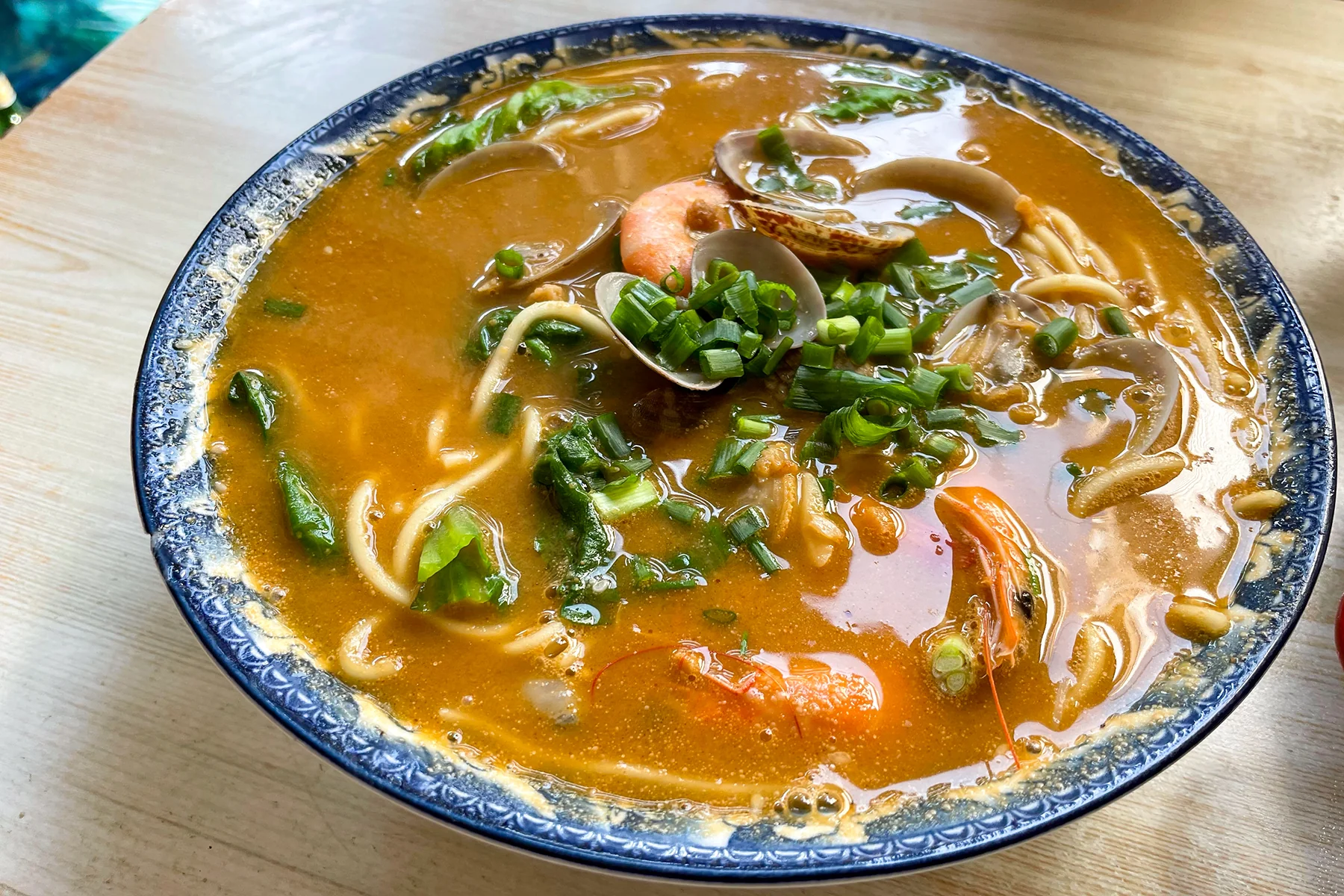
Xiamen's food reflects Minnan cooking and its coastal setting. Small snacks work well between walks, but leave one meal for a seated restaurant where you can ask how seafood is priced and prepared. A busy market street can be fun; it need not be your only food stop.
Start with local dishes
Shacha noodles (沙茶面, shāchá miàn) use a rich, savory sauce and may include seafood or meat toppings. Oyster omelet (海蛎煎, hǎilì jiān) is another local favorite. Peanut soup (花生汤, huāshēng tāng) and other sweets offer a different break from savory snacks. Recipes vary from shop to shop, so ask what is in a bowl rather than treating a dish name as a complete ingredient list.
Seafood without surprises
At a seafood restaurant, clarify the price unit, approximate weight, cooking method and expected total before ordering. Ask whether a displayed fish or shellfish is sold by portion or by weight. If your group has allergies, show a clear written explanation in Chinese and have the kitchen confirm ingredients and shared equipment; seafood and peanuts are common in local food.
Eat the port and the coffee city together
For one mainland food day, begin with a local breakfast near the old center, walk through the working traces of Shapowei's former harbor, then take a coffee pause rather than a third snack queue. Fujian's Shapowei reporting and coffee coverage show why the newer cafe scene belongs beside Minnan food. On another day, Jimei's Dashe area offers a different bowl of shacha noodles. Do not carry a long must-eat list onto the Gulangyu ferry day.