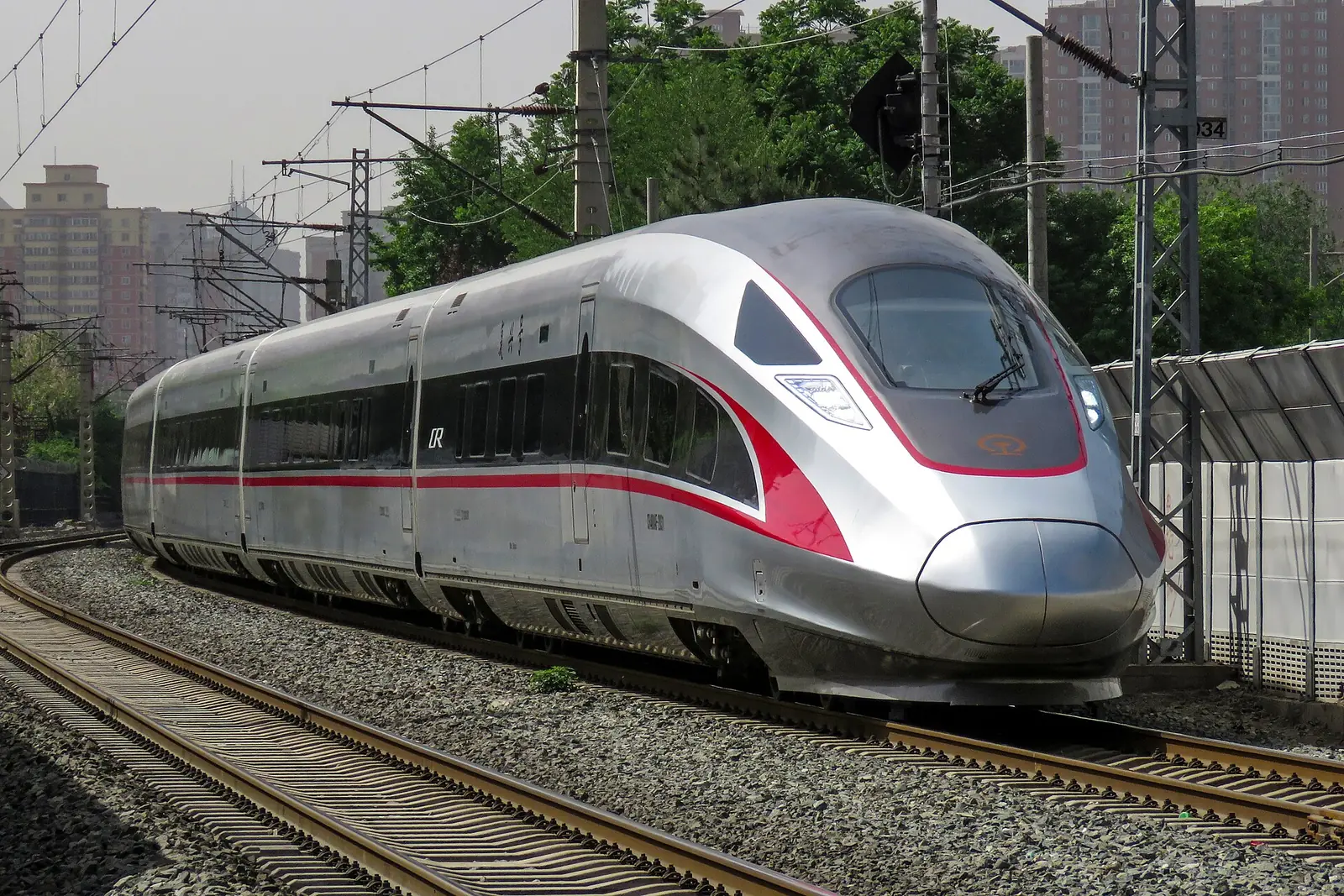
China’s high-speed train network is often simpler than domestic flying once you understand three things: stations are large, identity checks matter, and you need more buffer time than many visitors expect. Once those three points are clear, trains usually become one of the easiest parts of a multi-city China trip.
The biggest reason foreign visitors get nervous is not that the rail system is chaotic. It is that the system is efficient at a scale they may not be used to. Stations are big, flows move quickly, and you do not want to solve a passport or gate problem at the last minute.
How to book a high-speed train with a foreign passport
Start with the official China Railway 12306 English website or the official Railway 12306 app. The English website says it accepts valid foreign passports; other eligible documents and purchase channels are described in the government’s guide for international visitors. Check the current service and document requirements before relying on a particular channel.
- Create an account and verify identity. Enter each traveler’s details as requested, matching the passport used for travel. The official guidance describes automatic verification, a passport-photo upload for manual review, or in-person verification at a railway station ticket office if needed. Allow time for any review before a popular travel date.
- Search the exact city, date and stations. Shanghai Hongqiao and Shanghai Railway Station, for example, are different stations. Check both the departure and arrival station against your hotel and onward transport before selecting a train.
- Select travelers and a seat class. Review each passenger’s identity details, the date, departure time and station before paying. Follow the current railway guidance for child travelers and any discount eligibility.
- Pay and confirm the order. The government guide lists eligible Chinese and foreign bank cards and mobile payment options for official online channels. If a card or verification fails, check the payment message, try another supported method or ask at a station ticket office. Do not assume a failed payment created a confirmed ticket.
- Keep the confirmation and original identity document. Take the same original passport or other accepted document used for that passenger’s booking. A screenshot is a useful backup for the train number and station, but it is not a substitute for the identity document.
The 12306 English website also explains ticket changes and refunds. Rules, deadlines, possible fees and refund routes depend on the ticket and transaction, so review the terms shown for your booking or ask the railway operator before changing plans. An itinerary printout is information about the trip, not a replacement for the required travel document.
Plan the whole station-to-hotel journey
The train time is only one part of a transfer day. Allow for the trip to the correct station, security and the waiting area, then for the arrival station to your hotel. Add more margin during holidays, with young children or when a train connects to a flight. For the next decision, compare our China transport planning hub and first-time China routes; for payment backup, see how to pay in China.
Sources checked October 28, 2026: China Railway’s English booking and FAQ pages and the Chinese government’s international visitor guide linked above. Recheck the official service for your travel date.
Why trains beat flying on many classic routes
For routes such as Beijing to Xi’an, Shanghai to Hangzhou, and Shanghai to Suzhou, trains often win even before you compare comfort. Airports usually mean earlier departures from the hotel, longer dead time before boarding, and more variable transfer stress on both ends.
By contrast, trains tend to offer:
- simpler city-center to city-center logic
- easier continuity in a classic multi-stop route
- less wasted time in airport procedures
- a calmer experience for families and first-time visitors
Trains are not always better. Very long distances can still favor flights. But on many of the routes foreign visitors actually take, high-speed rail is the more elegant choice.
Arrive earlier than you think
For major stations, arriving 45 to 60 minutes before departure is usually the safer choice for visitors. That removes stress around security, finding the right waiting hall, and dealing with station scale. If the station is unfamiliar, your passport check or gate flow takes longer than expected, or you are traveling during a holiday period, that extra margin matters.
If you are experienced, lightly packed, and already understand the station, you can sometimes work with less. First-time visitors should not plan that tightly. The main goal is not to maximize efficiency by cutting the timing close. It is to make the transfer day feel smooth.
What to keep with you
Keep these items accessible, not buried:
- passport
- booking record or ticket confirmation
- the next hotel name and address
- a screenshot or printed version of key details
Even on digital-first trips, a hotel address in Chinese is still useful. It helps at stations, in taxis, and during transitions when your data connection or app flow is slower than expected.
Best routes for visitors
Some routes are particularly friendly for first-time travelers:
- Beijing to Xi’an
- Shanghai to Hangzhou
- Shanghai to Suzhou
These routes are central, comfortable, and often easier than airports once hotel-to-station transfer time is included. They also fit naturally into the types of itineraries most international travelers actually book.
Seat classes and comfort expectations
For most visitors, the key choice is not “train or no train.” It is which class makes the route feel comfortable.
- Second class is often completely fine for short and medium routes.
- First class adds space and calm, which can be worth it on longer sectors.
- Business class is mainly a comfort upgrade, not a necessity.
If the trip is part of a honeymoon, premium first China route, or multigenerational itinerary, upgrading one or two longer train legs can improve the day more than spending the same budget on another attraction.
How a train day usually works
A good transfer day is usually simple:
- Leave the hotel with enough margin.
- Arrive at the station early enough to clear checks without rushing.
- Find the right waiting area and stay alert for boarding changes.
- Keep your passport and essentials easy to reach.
- On arrival, move directly into your next transfer instead of improvising on the platform.
None of this is hard, but it is easier when planned clearly. The train itself is usually the least stressful part of the day. The handoffs around it are what need attention.
Common mistakes foreign visitors make
The most common mistakes are predictable:
- treating the station like a small European rail terminal
- arriving with too little buffer
- assuming mobile apps will solve every step on the spot
- packing poorly for a transfer day
- choosing flights on routes where trains would have been cleaner
Another mistake is using trains just because they seem “authentic” or efficient in theory. The best use of rail in China is practical, not romantic. Choose it where it simplifies the trip.
When flights still make more sense
Flights are still reasonable when the rail time is long enough to dominate the day, when the route is very stretched geographically, or when your itinerary already requires airport logic for the next segment.
The right question is not “Are China’s trains better than planes?” It is “Which transfer gives this specific route the least friction?” On many classic itineraries, the answer is rail. On others, it is not.
A good rule for first-time visitors
If a route is one of the classic city pairs and the train is well established, start by assuming rail is the better option. Then only switch to a flight if time, pricing, or your broader route makes that genuinely cleaner.
That mindset usually produces a better China itinerary. It keeps transfer days more understandable, reduces airport drag, and lets the trip feel connected rather than fragmented.