Chinese Calendar
Use this page to check today's Chinese calendar date in Beijing Time, understand the 2026 Chinese calendar, and read a simple guide to lunar months, zodiac years, festivals, and travel timing.
Updated September 3, 2026 · Curated by Luhao Zhao, a Gen Z China local with 20+ years living in China.
Chinese Calendar Today
Today on the Chinese calendar
Selected China date
Chinese lunar date
Ninth Month, Day 20
Year of the Horse · bing-wu
Festival or solar term
No listed festival or solar term on this date.
A festival date is different from an official public-holiday period. Use the holiday dates below when planning travel.
October 2026
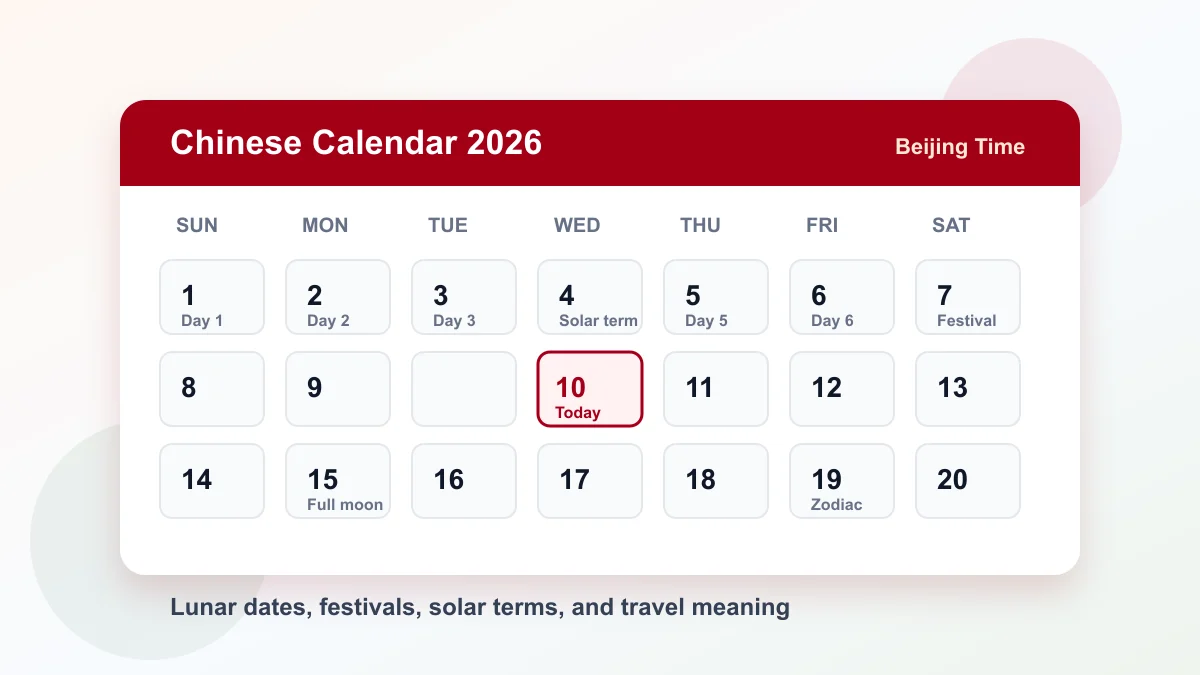
Select a day to compare its Gregorian and lunar dates. A dot marks a festival or solar term; select that day for its name. Solar-term labels are provided for 2026. For the whole year, open the 2026 month-by-month calendar.
Dates use China time. The zodiac year changes at Chinese New Year.
Chinese calendar 2026: all twelve months
Open a month to find the lunar date for any day in 2026. Dates follow Beijing Time (UTC+8). Festival labels mark the celebration itself; check the separate public-holiday table for days off and travel planning.
Calendar reference checked September 3, 2026: Hong Kong Observatory's printable 2026 Gregorian–lunar conversion chart and 2026 solar terms.
2026 Travel Pressure
Which Chinese calendar dates change travel planning most?
The Chinese calendar matters to travelers when a festival becomes an official holiday period. In 2026, Spring Festival and National Day create the broadest nationwide pressure, while Labor Day, Qingming, Dragon Boat Festival, and Mid-Autumn Festival can tighten trains, flights, hotels, and timed-entry attractions on popular routes. Qixi falls on August 19, but it is a cultural festival rather than a nationwide public holiday. Use the official holiday periods below for booking decisions, then verify the exact train, attraction, and hotel rules for your route.
Sources reviewed August 19, 2026: the Hong Kong Observatory Almanac 2026 for the traditional Chinese calendar and the State Council 2026 public-holiday notice for official holiday periods.
Planning a trip around a Chinese holiday?
Share your dates, cities, and fixed bookings so we can help protect the route from holiday transport and attraction pressure.
Chinese Calendar 2026
Key 2026 dates travelers should know
Start of the Bing-Wu Horse year. Expect the strongest family travel pressure around this period.
The closing festival of the New Year period, with lantern events and local evening crowds.
A solar-term based festival for tomb sweeping and family visits, not a fixed lunar date.
Watch for short-break travel, river events, and zongzi traditions.
Often described as Chinese Valentine's Day in modern travel and dining content.
A family festival tied to mooncakes, night views, and heavier domestic travel.
A traditional day linked with climbing, elders, and autumn outings.
The 2026 Chinese zodiac year is the Horse year. It starts on Chinese New Year, February 17, 2026, not on January 1.
Chinese Calendar Guide
How to read the Chinese calendar
The Chinese calendar is often called the Chinese lunar calendar, but it is more accurate to call it a lunisolar calendar. It follows moon cycles for months and uses solar rules to stay close to the seasons.
That is why Chinese New Year, Dragon Boat Festival, Qixi Festival, and Mid-Autumn Festival move on the Western calendar each year. A search for "chinese calendar today" should always use China time.
Travel Meaning
Why it matters in China
The red labels in the calendar mark major Chinese festivals, public holidays, and solar terms. Solar terms are seasonal markers such as Qingming, Summer Solstice, Autumn Equinox, and Winter Solstice.
For travel, the practical value is understanding crowd patterns, family holidays, temple visits, food customs, and why some dates feel more important locally.
Chinese Calendar Basics
What the Chinese calendar means for travelers
The Chinese calendar is a lunisolar calendar. That means it follows the moon for months, but it also uses solar rules so the calendar stays close to the seasons. This is why many important Chinese festivals move on the Western calendar each year. Chinese New Year, Dragon Boat Festival, Qixi Festival, Mid-Autumn Festival, and Double Ninth Festival do not always fall on the same Gregorian date.
Chinese calendar today
When people search for "Chinese calendar today", they usually want today's lunar date, lunar month, and zodiac year. The answer should use China time, not the time zone of the reader. This matters if you are checking from the United States or Europe, because the date in Beijing can already be tomorrow.
Chinese calendar 2026
The Chinese calendar 2026 year is important for trip planning because Chinese New Year starts on February 17, 2026. Around that period, family travel is heavy, train tickets are harder to buy, and some local businesses change their hours. If your route is flexible, check holiday dates before booking hotels and trains.
Lunar date and solar terms
A lunar date tells you the month and day in the Chinese calendar. Solar terms mark seasonal points such as Qingming, Summer Solstice, Autumn Equinox, and Winter Solstice. Travelers see these ideas in food, temple visits, flower seasons, family customs, and crowd patterns.
How to use this page
Start with the live tool above to check the current Chinese calendar date. Then use the 2026 date list to understand the major festival points. If your trip crosses a family holiday, leave more time for transport, book popular hotels earlier, and expect famous sights to feel busier.
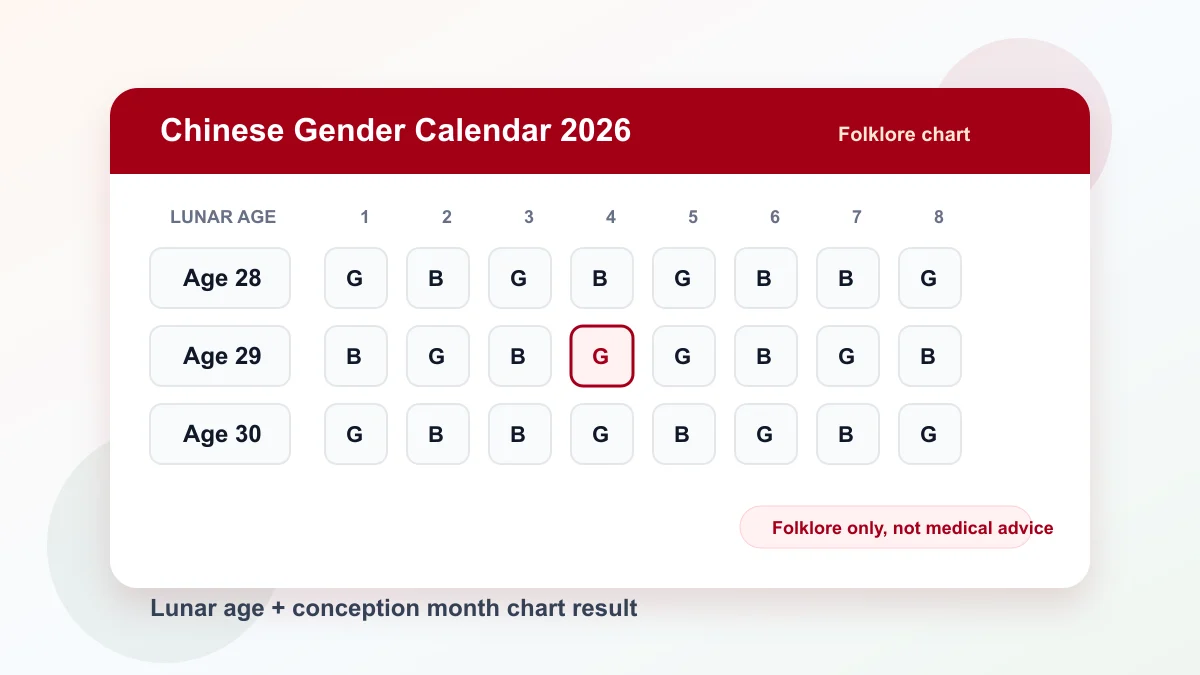
This page is built for travel and culture context. Use the lunar calendar to find festival dates and the official holiday periods to plan transport and stays. For practical planning, combine this page with our best time to visit China guide, the China train guide, and the Chinese gender calendar folklore tool if you are looking for that separate topic.
Practical Answers
Chinese calendar FAQ for travelers
When is Mid-Autumn Festival in 2026?
Mid-Autumn Festival falls on Friday, September 25, 2026, the fifteenth day of the eighth lunar month. The official holiday period runs from September 25 to 27; allow for extra demand for trains, hotels, and evening attractions.
Where can I see the full Chinese calendar for 2026?
Open any of the twelve month tables on this page to compare all 365 Gregorian dates with their lunar dates, festivals, and 2026 solar terms. The tables work without JavaScript; the linked Hong Kong Observatory conversion chart provides a printable reference.
Which 2026 Chinese holidays affect travel the most?
Spring Festival and the October National Day holiday create the broadest travel pressure. Labor Day, Dragon Boat Festival, Mid-Autumn Festival, and Qingming can also tighten transport and attraction availability on popular routes.
Which time zone should a Chinese calendar today tool use?
Use China Standard Time, UTC+8. A traveler checking from Europe or the Americas may still be on the previous Gregorian date while Beijing has already moved to the next Chinese calendar day.